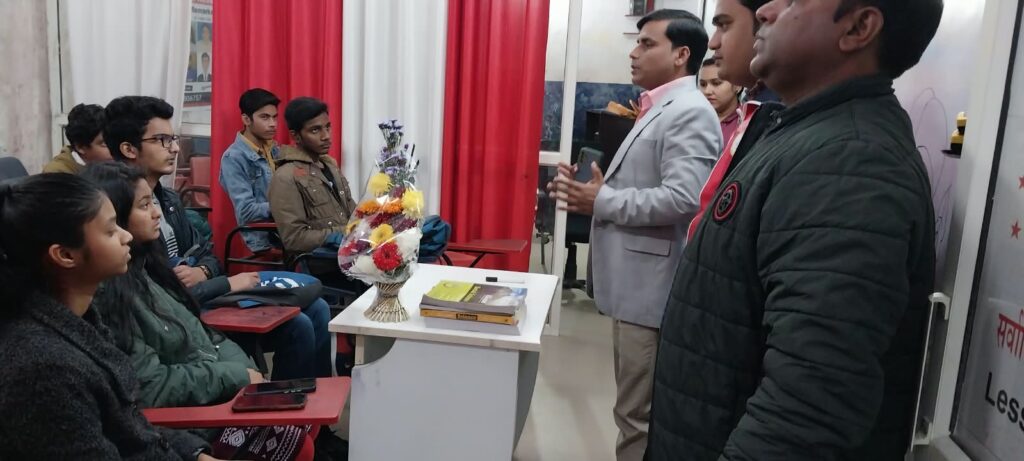
Student Discipline and Study Tips are essential for students who want to improve classroom behaviour, manage time effectively and prepare better for examinations. The Career Platform team motivates students to maintain classroom discipline, develop consistent study habits and focus on their academic goals. From CBSE board exams to IIT-JEE and NEET preparation, the right approach to learning can help students build strong concepts and study more effectively.
At Career Platform, the team emphasises the importance of maintaining classroom discipline and developing smart study habits. Through student guidance and motivational discussions, the aim is to encourage learners to take responsibility for their education and approach their academic goals with greater focus.
Whether students are preparing for CBSE board examinations, IIT-JEE, NEET-UG, Olympiads or school-level assessments, a disciplined approach can make daily learning more organised and productive.
Career Platform Team Encourages Students to Build Discipline
Classroom discipline is not simply about following rules. It is about creating an environment where every student can learn comfortably, ask questions and participate in academic activities without unnecessary distractions.
The Career Platform team encourages students to understand that discipline begins with small daily actions. Arriving on time, listening carefully, completing assignments and respecting classmates can gradually become positive habits.
A disciplined classroom benefits both students and teachers. Lessons can proceed smoothly, doubts can be discussed effectively, and learners can devote more attention to understanding important concepts.
Students should also remember that discipline does not mean being afraid to ask questions or make mistakes. A good learning environment allows students to express doubts respectfully and learn from their errors.
1. Listen Carefully During Classroom Teaching
One of the most useful study habits is active listening. Students should try to understand the explanation rather than merely copy everything written on the board.
During a lesson, focus on the main concept, important formulas, examples and the reasoning behind each solution. If something is unclear, note the doubt and ask the teacher at an appropriate time.
For subjects such as Physics, Chemistry and Mathematics, understanding the process is often more useful than memorising a final answer.
Students can improve classroom learning by:
- Keeping notebooks and study materials ready before class.
- Avoiding unrelated conversations during explanations.
- Writing down important concepts in their own words.
- Asking relevant questions when they encounter difficulties.
- Reviewing the lesson after class.
These habits help students become more active participants in their education.
2. Follow a Daily Study Timetable
Time management helps students organise their academic responsibilities without feeling overwhelmed. Instead of deciding what to study at the last moment, students can create a realistic timetable that includes classes, homework, revision and practice.
An effective timetable should reflect the student’s school schedule, current preparation level and upcoming examinations.
For example, students can divide their study time into three activities: reviewing concepts taught in class, practising questions and revising previously studied topics.
A timetable should remain flexible enough to accommodate difficult chapters and school assignments. The purpose is to develop consistency, not to fill every available minute with study.
Students should also allow time for meals, breaks, physical activity and adequate sleep. Rest supports concentration and helps learners maintain a sustainable routine.
3. Revise Lessons Regularly
Revision is an essential part of effective preparation. A concept that appears clear during class may become difficult to recall after several days if it is never reviewed.
Students can make revision easier by reviewing their notes soon after class, solving a few questions on the topic and revisiting important concepts later in the week.
For Physics, a formula notebook can help organise equations and their applications. For Chemistry, students can revise reactions, concepts and important facts according to the prescribed syllabus. For Mathematics, regular problem-solving practice helps reinforce methods and identify gaps in understanding.
Students should pay particular attention to topics they repeatedly find difficult.
Regular revision helps make learning more organised and reduces dependence on last-minute preparation.
4. Practise Questions Instead of Only Reading Notes
Reading textbooks and class notes is important, but students also need to apply what they have learned.
Practice questions help students understand whether they can use a concept independently. They also reveal common mistakes, calculation errors and topics that require additional revision.
Students preparing for JEE or NEET should gradually move from fundamental questions to examination-style practice appropriate to their current level.
After completing a question, students should review the solution and understand why a particular method works. Simply checking whether the final answer is correct may not reveal the underlying mistake.
A useful habit is to maintain a mistake notebook. Record difficult questions, incorrect approaches and concepts that need further attention. Revisit these questions during revision.
5. Maintain Discipline Inside and Outside the Classroom
Good academic habits should continue beyond classroom hours. Students can support their learning by organising their study space, keeping materials ready and setting realistic goals for each day.
Classroom discipline also involves respecting teachers and classmates, listening while others speak and contributing constructively to discussions.
Students should use mobile phones and other digital devices thoughtfully during study sessions. Notifications and unrelated browsing can interrupt concentration, so keeping unnecessary distractions away can make study time more productive.
At the same time, students should not hesitate to seek help when they need it. Asking for clarification, discussing a difficult question and learning from feedback are signs of active learning.
6. Learn Time Management for Board Exams, JEE and NEET
Different examinations require different preparation strategies, but planning and consistent practice are useful across them.
For CBSE board examinations
Students should understand the prescribed syllabus, practise relevant question formats and review important concepts regularly. Writing answers within a suitable time limit can help them prepare for the examination environment.
For IIT-JEE preparation
JEE aspirants need a strong understanding of Physics, Chemistry and Mathematics. They should balance conceptual study with numerical problem-solving, revision and mock-test analysis.
For NEET-UG preparation
NEET aspirants should follow the applicable syllabus, strengthen Biology, Physics and Chemistry concepts, and practise questions in accordance with the current examination pattern.
Students must verify the official syllabus and examination information for their respective examination year rather than relying entirely on old notes or unofficial claims.
In every case, students should identify their weak areas and use their available study time accordingly.
7. Set Small and Achievable Academic Goals
Large academic targets can sometimes feel difficult to manage. Breaking them into smaller tasks can make preparation more organised.
Instead of setting a vague goal such as completing an entire subject quickly, a student can plan to understand one topic, solve a defined set of questions and revise the key concepts.
At the end of the day, students can check which tasks were completed and which require more attention. Weekly reviews can help them adjust their study plans.
Goals should be realistic and based on individual learning needs. Students should focus on their own progress rather than constantly comparing themselves with classmates.
8. Learn from Mistakes and Accept Feedback
Mistakes are a normal part of learning. What matters is understanding why an error occurred and taking steps to correct it.
Students may make mistakes because they misunderstood a concept, applied the wrong formula, misread a question or rushed through a calculation.
Teachers can help students identify these patterns and suggest ways to improve. Students should approach feedback with an open mind and use it to guide their revision.
A test score provides information about current preparation; it does not define a student’s long-term potential.
By reviewing mistakes regularly and practising difficult topics again, students can develop a more thoughtful approach to their studies.
9. Maintain a Healthy Balance Between Study and Rest
Effective preparation is not about studying continuously without breaks. Students need adequate rest and a routine that supports concentration throughout the day.
Taking short breaks between study sessions can help learners return to their work with better focus. Regular physical activity, sufficient sleep and time for hobbies can also support general well-being.
Students should avoid copying extreme study schedules from other people. A routine that works for one learner may not suit another.
The goal is to develop sustainable habits that support both academic progress and personal well-being.
10. The Role of Teachers and the Career Platform Team
Teachers and academic teams play an important role in helping students develop the habits required for effective learning.
They can explain concepts, clarify doubts, encourage classroom participation and guide students towards more organised preparation.
At Career Platform, student guidance around discipline and study habits reflects the importance of combining academic instruction with responsible learning practices.
The team encourages students to approach their studies with sincerity, respect classroom rules, ask questions when necessary and revise consistently.
Parents can support these efforts by encouraging a balanced routine, communicating with teachers when appropriate and recognising the effort students put into improving.
Academic progress is a shared process involving students, teachers and families.
Frequently Asked Questions
How can students maintain classroom discipline?
Students can maintain classroom discipline by arriving on time, listening carefully, following classroom guidelines, respecting others and participating constructively in lessons.
How many hours should students study daily?
There is no single ideal number of study hours for every student. Study time should depend on age, school schedule, academic needs and examination goals. Consistent, focused learning is more useful than following an unrealistic timetable.
How can students prepare better for exams?
Students should understand their syllabus, revise regularly, practise relevant questions, analyse mistakes and take suitable mock tests. They should also maintain adequate rest and avoid leaving all revision until the final days.
Why is classroom discipline important?
Classroom discipline helps reduce unnecessary distractions, supports effective teaching and creates an environment where students can concentrate, ask questions and learn together.
How does Career Platform motivate students?
Career Platform emphasises student guidance, classroom discipline, conceptual understanding and consistent preparation to help learners develop positive academic habits.
Conclusion: Discipline Today, Better Learning Tomorrow
Academic progress is built through consistent effort, effective study habits and a willingness to learn from mistakes. Classroom discipline helps students use learning time productively, while revision, practice and time management support more organised preparation.
The Career Platform team encourages students to respect the learning environment, stay focused on their goals and approach their studies with confidence and responsibility.
Students do not need to become perfect overnight. They can begin with small steps: listen carefully, revise one topic, complete an assignment and learn from one mistake at a time.
Career Platform — Building Concepts, Creating Futures.
Visit the official website: https://careerplatform.in/

Pingback: Top 10 Best Coaching Institutes for JEE & NEET in Delhi I 2026-27
Pingback: Why Choose Career Platform? 7 Reasons to Know